Journal · Commercial
Decorative and Privacy Film for Offices: Conference Rooms, Partitions and Brand
How decorative and privacy window films create privacy, refinement and brand presence in Class-A offices and professional suites.
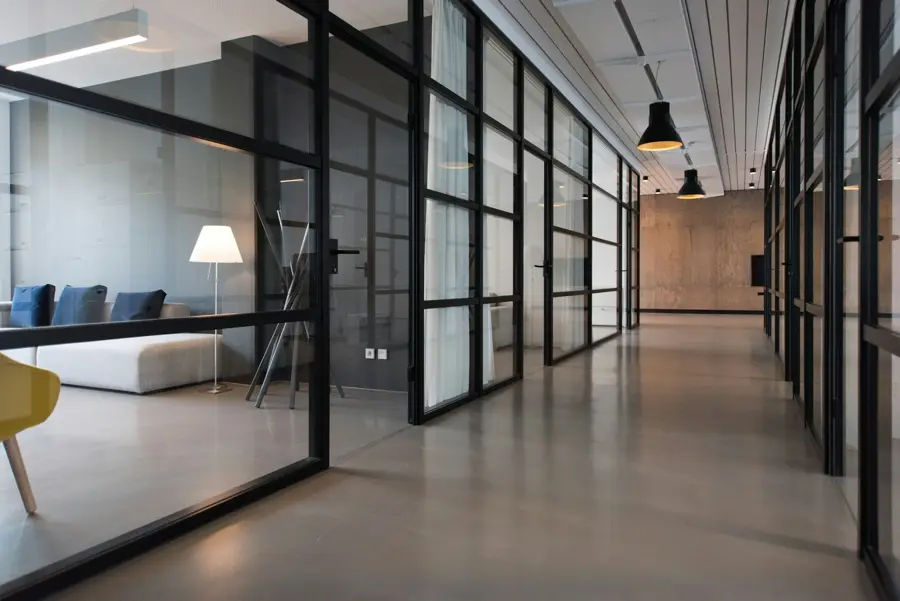
Glass-walled offices feel open and modern, but they create practical problems: confidential conversations in full view, distraction from constant movement, and safety concerns when people walk into clear glass. Decorative and privacy films solve these problems while adding refinement.
Privacy without walls
Frosted and etched-glass films obscure visibility while still transmitting light. Applied to conference rooms, executive offices and HR spaces, they create visual privacy without closing off the floor plan. Films can cover the full pane or a band at seated eye level, keeping rooms bright while hiding screens and documents.
Gradients, patterns and custom designs
Gradient films fade from frosted to clear, offering privacy where it matters and openness above. Patterned films such as lines, textures and geometric designs add architectural interest. Custom-cut designs can incorporate logos, wayfinding or artwork, and these can be part of a firm's brand.
Safety and visibility
Large clear panes can be hard to see. Decorative bands or graphics at eye level help people recognize glass partitions, and some accessibility and safety guidelines address glass visibility. We can design markings that are functional and elegant.
Brand presence
Reception glass, entry doors and storefronts are often the first thing a client sees. Frosted logos, dimensional-looking etched graphics and refined patterns signal quality without loud signage.
Removable and adaptable
Unlike sandblasted or replaced glass, decorative film can be removed by a professional, which is useful for tenants in leased space who need to restore glass at lease end, or for firms that rebrand.
Combining with solar control
On exterior glass, decorative film can sometimes be combined with solar control strategies. Our article on commercial window film covers performance films.
Medical, legal and financial offices
Professional offices handling confidential information have particular privacy needs. Conference rooms, consultation rooms and records areas benefit from frosted or patterned film that keeps conversations visually private. Window film on exterior glass can also block views into ground-floor offices from parking lots and sidewalks while preserving daylight.
Executive suites
Executive offices with glass fronts can use partial frosting or gradient films that maintain openness while providing privacy behind the desk. Custom patterns or subtle branding can make these spaces feel distinctive.
Hospitality and retail
Restaurants, boutiques and hotels use decorative film for entries, restrooms, private dining rooms and storefronts. Films can carry brand graphics, hours and logos with a refined appearance. In retail, decorative film can create privacy for back-of-house areas while maintaining a polished look.
Residential applications
Decorative films are not just for offices. In luxury homes, they are used on bathroom windows, front door sidelights, glass interior doors and wine room glass. Gradient and frosted films provide privacy with natural light. Our decorative film page covers residential uses.
Choosing a pattern
- Consider how much privacy you need and at what height.
- Think about how the pattern relates to architecture, such as mullions and door frames.
- View samples in the actual space, with its real lighting.
- Consider the view from both sides of the glass.
Durability and care
Decorative films are cleaned with mild solutions and soft cloths. Avoid abrasive pads and sharp tools. In high-traffic areas, they hold up well to routine cleaning.
Lease considerations
Tenants should check their lease for rules about alterations to glass. Because decorative film is removable, landlords often approve it more readily than permanent changes. We can provide documentation for landlord review.
From concept to installation
Decorative projects begin with a walkthrough of the space and a conversation about privacy needs, brand standards and the overall design. We then propose patterns or custom designs, often with a simple visual showing where film will be applied and at what height. Once approved, we measure precisely and produce custom-cut film where needed. Installation is scheduled around business hours, and spaces are left clean and ready for use.
Thoughtful details
The difference between ordinary and refined decorative film is often in the details: aligning bands across adjacent panes, keeping consistent heights through a corridor, respecting mullions and door hardware, and choosing a pattern that complements the architecture. These details are what make film look like part of the original design.
Wayfinding and suite identity
In multi-tenant buildings and larger offices, decorative film can also do quiet practical work: suite numbers on glass doors, room names on conference rooms and subtle directional graphics in corridors. Executed in frosted or etched-look film, this kind of wayfinding feels architectural rather than like signage, and it can be updated as teams and layouts change. It pairs naturally with privacy bands, so a single, coordinated film scheme can cover branding, privacy and navigation across an entire floor.
Planning a project
We measure each pane, help you choose patterns or design custom graphics, and schedule installation around your business hours, including after hours when needed. Learn more about decorative and privacy film, office window tint, or arrange a consultation.